
Do you need a
HUG?
Human Understanding Groups (HUGs)
Finally a social navigation framework that’s actually neuroaffirmative.
The HUG protocol is for humans who want to connect with other humans: Every time.
I created the HUG protocol so that humans could learn to feel confident and connected when navigating social waters. Every time we have a HUG, we ask of each communication exchange:
Is it kind? We ask this question because humans need signals of safety to hear what we’re saying. If we don’t feel safe to others, we won’t be heard by them.
Is it clear? We ask this question because if we say too much or too little we will overwhelm or confuse our listener, leading to a loss of the message.
Is it responsible? We ask this question because if we are not aware of—or accountable for— our own emotions or the impact of our communication on others, we create a lack of safety and trust in the relationship.
How does it feel in my body? We ask this question because good communication feels good to give and receive; even if the message is hard to hear!
All humans can grow in their communication with the HUG protocol through experiential learning grounded in real life moments.
The conflict is the curriculum
EXPAND YOUR SOCIAL CAPACITIES
The HUG Protocol helps us learn to feel connected through experiential problem solving.

Many “social skills” programs come with a set of expectations and “correct” ways to interact that may or may not be compatible with neurodivergent ways of being social.
The HUG protocol is different. HUGs assume that good communication must meet four basic requirements in order to be successful; and any interaction that does this qualifies as good communication.
It’s simple enough for even small children to learn.
It’s based on human neurobiology.
It works.
Over time, humans who participate in HUGs feel more confident and connected in their social navigation.

-
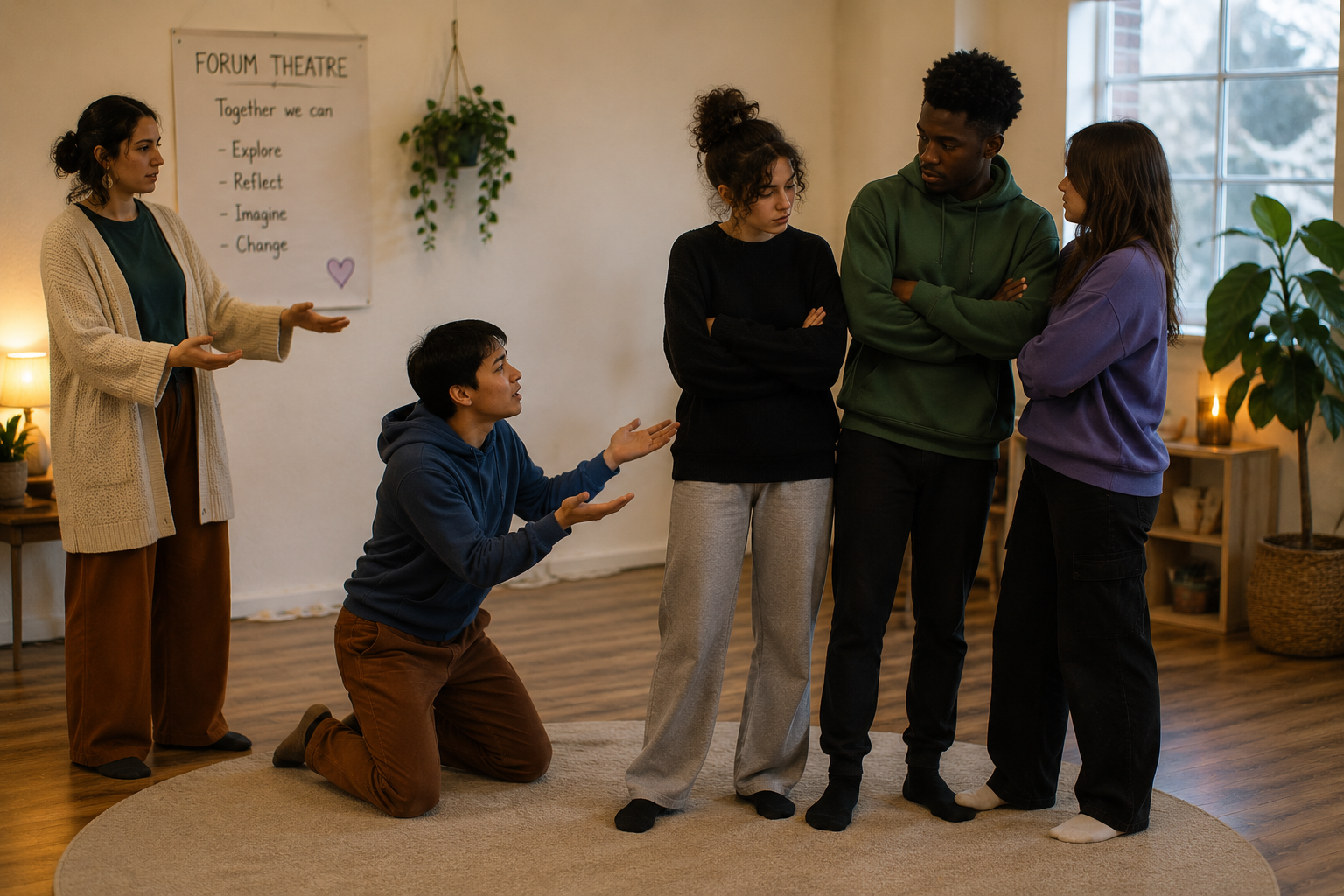
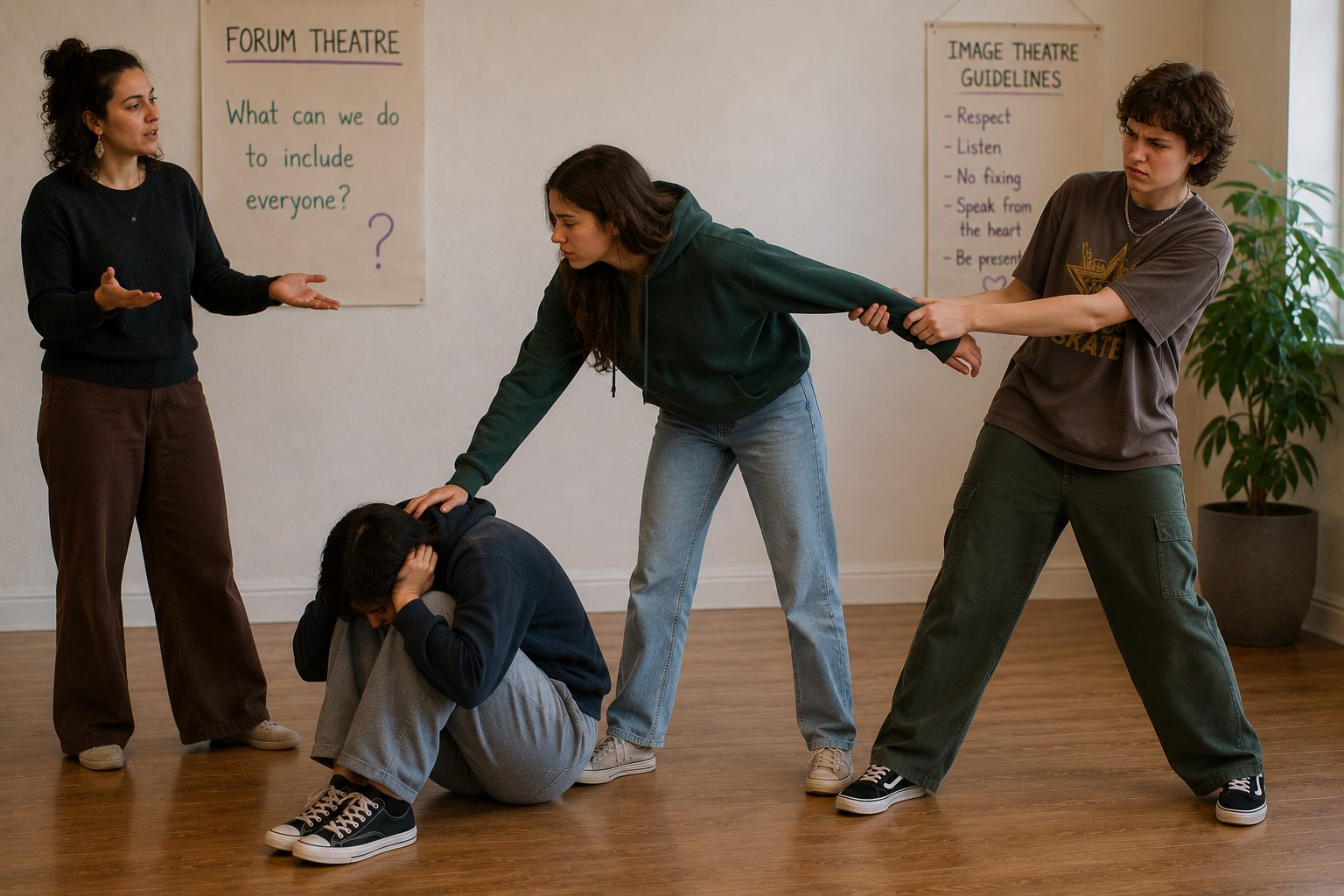
The HUG protocol is a fusion of Theatre of the Oppressed forums and games and the DIR/Floortime Functional Emotional Developmental Capacities (FEDCs), as well as theoretical principles from Internal Family Systems. It is currently under development. Trainings and opportunities for participation will become available in 2027.
-
Yes! Reach out to E at everybodyhealstherapy@gmail.com to receive updates on book publication timeline and early HUG offerings.
-
Depending on where HUGs are offered, they may be free or available for a one-time fee.
-
HUGs are always held in-person.
-
Any time a HUG is held, active participation is not required. Even “spectactors” can participate simply by witnessing, and learn from the problem solving of others.